I capsized within the first four minutes. Twice. By the end of the week, I didn't want to stop. That's roughly the arc of learning to kayak, and I wouldn't change any of it.
Australia is one of the best places in the world to learn water sports — the coastline is extraordinary, the conditions vary from sheltered harbour to open ocean, and there are hire outfits and guided tours everywhere from the Whitsundays to the Murray River. I started kayaking on a trip to Queensland and have since paddled in three states. Here's what I know now that I wish I'd known on day one.
Start in Flat Water
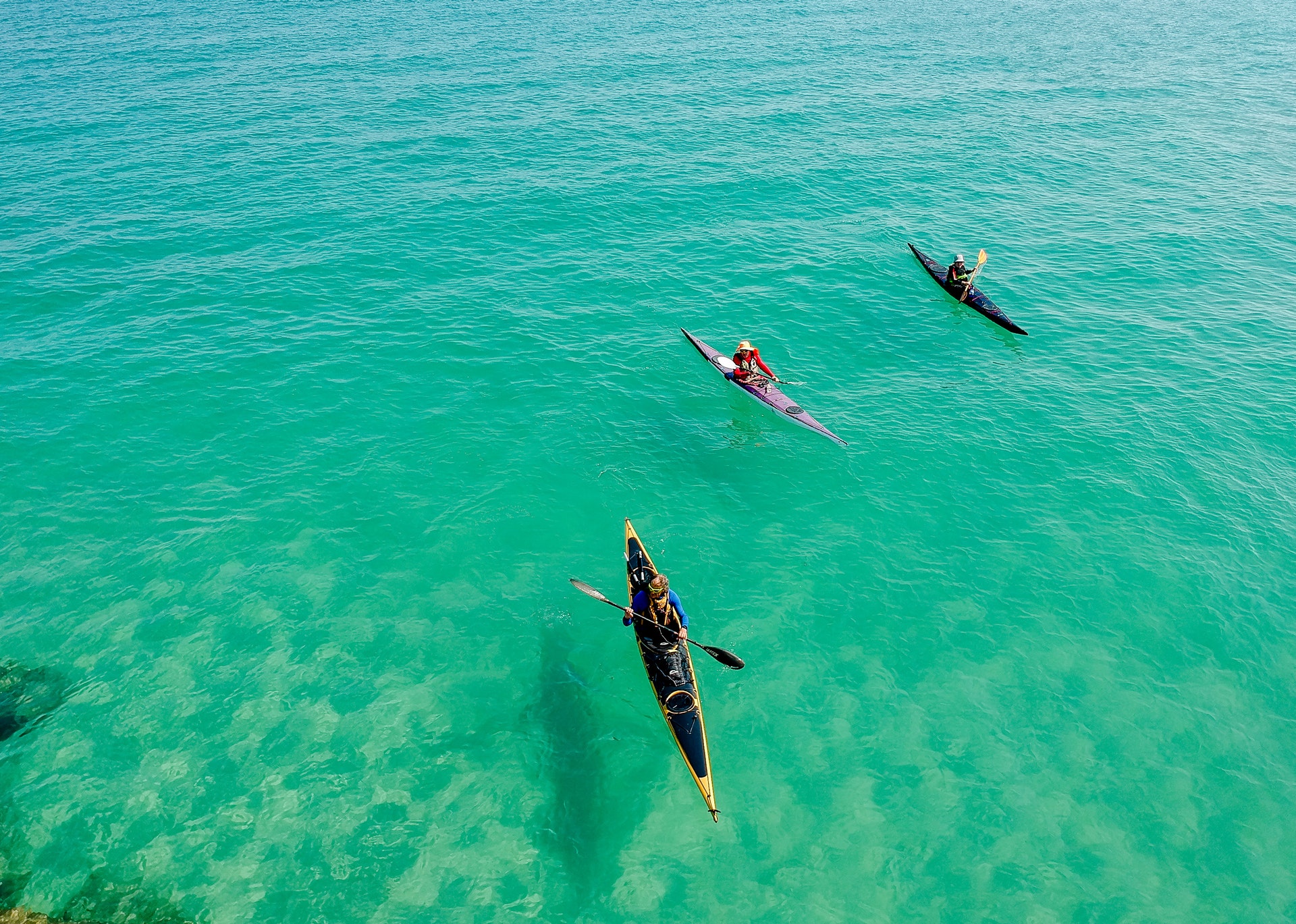
This seems obvious, but the temptation when you're on a beautiful coastline is to immediately take on whatever looks most dramatic. Resist this. Flat water — a harbour, a lake, a calm bay — will teach you the fundamentals without the added chaos of wind, chop, and current. Once you can hold a straight line and turn reliably in flat water, moving conditions become manageable rather than terrifying.
Your Posture Matters More Than Your Arms
Most beginners — me absolutely included — think kayaking is about pulling hard with your arms. It's not. The power in a paddle stroke comes from rotating your torso, not yanking with your biceps. Sit up straight, engage your core, and use the big muscles in your back and shoulders to drive the paddle through the water. Your arms are just the connection between your body and the blade. Get the posture right and you'll paddle twice as far on the same effort.
What to Wear and Bring
You will get wet. Accept this and dress accordingly. In warm conditions — most of coastal Queensland and northern WA — board shorts and a rash vest are fine. In cooler southern waters, a wetsuit is worth the investment. Always:
- Wear a properly fitted PFD (personal flotation device). No exceptions.
- Bring water — more than you think you need. Paddling is hard work.
- Sunscreen on any exposed skin, reapplied frequently. The reflection off the water makes burning happen fast.
- Secure your phone in a dry bag or leave it ashore. A wet phone is a very expensive paperweight.
- Tell someone where you're going and when you expect to be back.
The Best Places I've Paddled in Australia
Noosa Everglades, Queensland. Two hours north of Brisbane, the Noosa River winds through ancient wetlands that look like something from a different era. Guided overnight kayak tours let you camp on the river banks and paddle in complete silence. I saw a sea eagle catch a fish three metres from my kayak.
Pittwater, NSW. The protected waters north of Sydney between the Barrenjoey Peninsula and the mainland are perfect for a full day of paddling. Hire from Newport or Church Point and explore the little bays and the tiny communities that can only be reached by boat.
Wineglass Bay, Tasmania. The kayaking at Wineglass Bay is guided-only and not cheap, but the experience of paddling into one of the world's most beautiful beaches — watching the dolphins that usually accompany you — is worth every cent.
The Thing Nobody Tells You
Kayaking is meditative in a way that's difficult to explain until you've experienced it. The rhythm of the paddle, the sound of water, the way your attention narrows to what's directly in front of you — it does something to your nervous system that an hour of sitting meditation has never quite managed for me. I go paddling when I need to think clearly. I come back sorted. Every time.